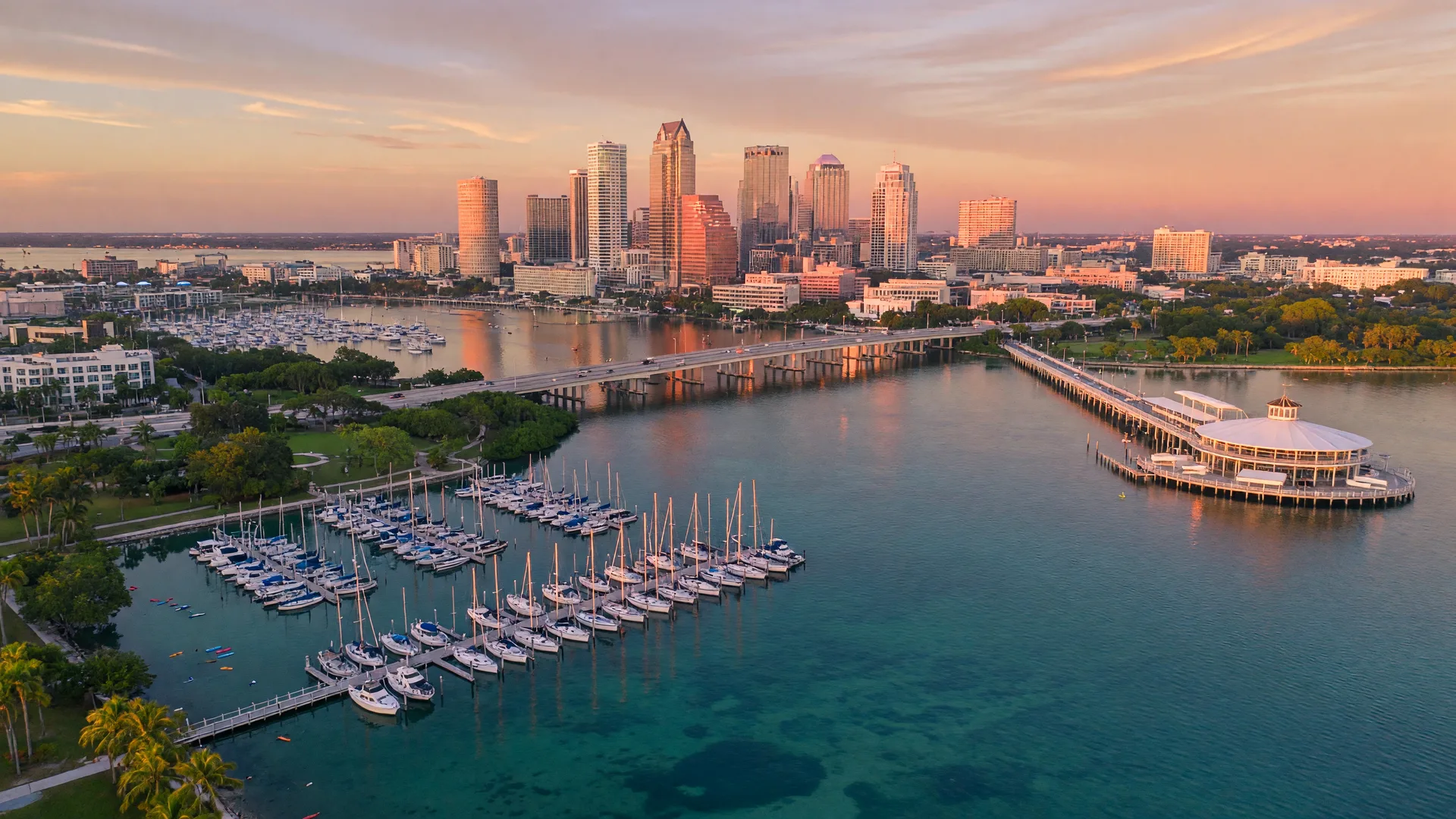
Thinking about making Tampa Bay your new home? As a local Realtor, I know there are so many things to consider beyond just finding the right house. This guide walks you through the cost of living, insurance, neighborhoods, schools, weather, and the tips I wish every newcomer knew before making the move.
$414K
Median Home Price
0%
State Income Tax
$1,500–$2,800
Monthly Rent Range
2.8M
Metro Population
The Basics
Tampa Bay's cost of living is moderate compared to other major Florida metros. The lack of state income tax is a significant financial advantage, but housing and insurance costs have risen in recent years. Here is a realistic breakdown.
The median home price in the Tampa metro is approximately $414,000–$450,000 as of mid-2026. Average rents range from $1,500–$2,000/month for a one-bedroom to $2,400–$2,800/month for a two-bedroom. Downtown and waterfront areas sit at the higher end. The broader Tampa–St. Petersburg–Clearwater metro median listing price is around $399,925.
Homeowners insurance in Florida averages around $4,200/year statewide, but can run $5,000–$10,000+ in coastal-adjacent neighborhoods like South Tampa, Davis Islands, and waterfront areas. Separate flood insurance is often required and costs $800–$2,500/year through the NFIP. Get insurance quotes before making any offer on a property.
Florida has no state income tax, no inheritance tax, and no estate tax. This is one of the biggest financial advantages of living here, especially for remote workers and retirees. Utilities run slightly above the national average, primarily due to air conditioning costs during summer.
$2,770–$3,700
Single adult / month
$5,800–$8,500
Family of four / month
Summer (May–October)
Hot and humid with daytime highs in the mid-90s°F. Frequent afternoon thunderstorms. The rainy season officially begins in June. UV index is extreme; sun protection and hydration are essential.
Winter (November–April)
Mild and pleasant with daytime temperatures between 50°F and 75°F. This is peak season for outdoor activities, markets, and festivals. Snowbird season brings more visitors and activity.
Hurricane Season (June–November)
Always be prepared, but the 2026 season is forecast to be below average in activity due to El Niño conditions. Invest in reliable hurricane shutters or impact windows and keep an emergency kit.
Check FEMA Flood Maps
Always check the FEMA flood map for any property before buying. Many coastal and low-lying areas (Bayshore, Ballast Point, Davis Islands) are in flood zones that require separate flood insurance. Flood zone designations can change over time.
Budget for Insurance
Premiums are highly variable by ZIP code. Independent brokers are often needed to find competitive rates. Get quotes before making offers. Coastal neighborhoods have significantly higher premiums than inland areas.
Coastal vs. Inland Trade-offs
Coastal and waterfront neighborhoods offer lifestyle appeal but come with higher flood risk and insurance costs. Inland areas like Carrollwood and New Tampa are hotter and more humid but have lower flood risk and insurance costs.
Tampa is car-dependent. Traffic congestion, especially during peak hours on I-275 and I-75, is a common complaint. A car is essentially a necessity. The TECO Line streetcar and Pirate Water Taxi serve downtown, but coverage is limited.
Tampa's job market is growing in healthcare, finance, and technology. The city is a popular retirement destination due to warm weather, no state income tax, and access to healthcare. Remote workers benefit greatly from the tax advantages.
Invest in reliable air conditioning. Pack lightweight, breathable clothing. Plan outdoor activities for mornings or evenings during summer. Sunscreen, sunglasses, and a good hat are year-round essentials. You will rarely need a heavy coat.
Tampa Bay has a laid-back, outdoor-oriented lifestyle. Waterfront dining, weekend markets, beach days, and community events are part of the rhythm here. Most neighborhoods have active community associations and regular events.
I have helped families relocate to Tampa Bay from all over the country. Let's talk about your timeline, budget, and what matters most to you.